


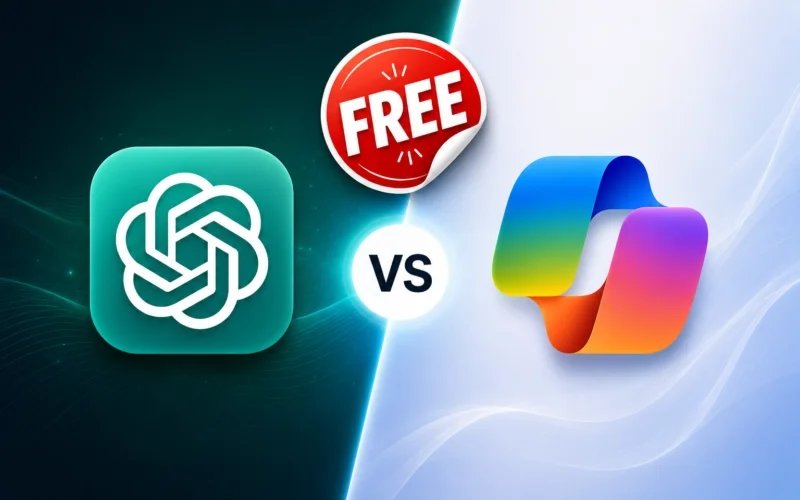
Malta is offering every eligible resident a free year of either ChatGPT Plus ou Microsoft Copilot, two of the world’s most popular AI-powered productivity tools. Depending on the subscription selected, residents could receive benefits worth around €240 per year or more, entirely free of charge.
The initiative forms part of Malta’s national AI for All (AI Għal Kulħadd) programme and follows a landmark agreement signed between Malta and OpenAI in May 2026. The deal made Malta the first country in the world to offer a nationwide ChatGPT Plus programme through a government-backed digital skills initiative, while Microsoft Copilot is available through a Microsoft 365 Personal subscription included under the scheme.
The initiative reflects Malta’s ambition to make artificial intelligence more accessible across society. Announcing the programme, Economy Minister Silvio Schembri said that “Artificial Intelligence is shaping our future” and that the initiative aims to ensure every citizen has the opportunity to participate in that future.
For expats living in Malta, one detail is particularly important: this is not limited to Maltese citizens. Residents who have access to Malta’s electronic identity system (e-ID) can also participate, making the programme available to a large portion of Malta’s international community.
Make Malta home
Planning a move to Malta? Get expert guidance on Malta residency, EU registration in Malta, work permits, residence permits, and Malta citizenship programmes. We connect expats, remote workers, and business owners with trusted local legal specialists.
Get expert guidance →After a bit of homework you can choose ChatGPT Plus or Microsoft Copilot
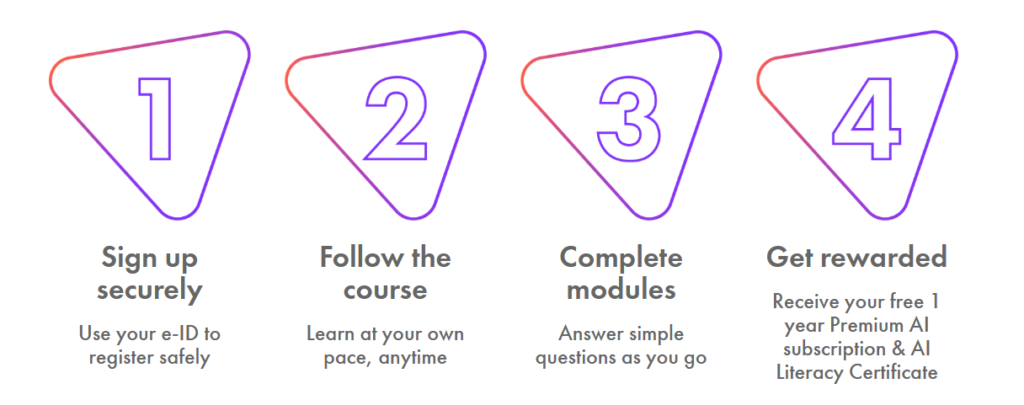
There is only one condition, and it is a fairly gentle one: before claiming the subscription, participants must complete a short AI literacy course designed by the University of Malta together with the Malta Digital Innovation Authority (MDIA), runs in both Maltese and English, and takes around two hours. It is self-paced, there is no deadline, and it is pitched at non-specialists, from teenagers to retirees, which is a polite way of saying nobody will be quizzed on neural network architecture. Think of it as the government buying you a year of premium software on the condition that you spend a couple of hours learning how to use it responsibly.
Registering takes an e-ID and about two hours of your afternoon. Access the AI for All course (delivered through the Coursera platform). Finish the three core modules (fundamentals of AI, AI for everyday life, and AI for learning) and you’ll receive a certificate. Lastly, MDIA emails you a code. You redeem that code for one of two subscriptions, your choice: OpenAI’s ChatGPT Plus or Microsoft 365 Personal with Copilot. Both are free for twelve months from the moment you activate them. After that, participants can either continue with a paid subscription or return to the free version. The good news is that your chats and account history remain intact. You lose the premium features, not the conversations.
ChatGPT Plus or Microsoft Copilot?
Once you’ve completed the course, you’ll need to decide which subscription best suits your needs.
| ChatGPT Plus | Microsoft Copilot |
|---|---|
| General-purpose AI assistant | Integrated into Microsoft 365 |
| Writing, research and brainstorming | Designed for Word, Excel and Outlook |
| Image generation and file analysis | Productivity-focused workflows |
| Flexible everyday assistant | Best for office-based work |
Why Is Malta Doing This?
Malta has a habit of spotting new technologies early and trying to get ahead of the queue. It did it with online gaming. It did it with blockchain, enthusiastically declaring itself “Blockchain Island” back in 2018. Now it is trying the same trick with artificial intelligence. The difference this time is that instead of starting with regulation, Malta has started with access.
The government is effectively paying residents to spend a couple of hours learning about AI in exchange for a year of premium software. For a country of just over half a million people, it is a relatively inexpensive way to generate international attention while encouraging digital skills at home.
What makes the initiative particularly interesting is that Malta was already among Europe’s most enthusiastic AI users before the programme launched. According to Eurostat, 46.5% of Maltese residents had used generative AI tools in the previous three months, compared to an EU average of 32.7%. In other words, the challenge was never getting people to try AI. The more likely goal is getting existing users to go deeper: free tier to paid tier, occasional use to daily use, curiosity to habit.
What Critics Are Saying
Not everyone is convinced. Some critics argue that a two-hour course is unlikely to create meaningful AI literacy on its own. Others question whether the scheme is as much about boosting adoption of major technology platforms as it is about education. There are also broader concerns about governments becoming more dependent on private AI companies, particularly when it comes to data, pricing and long-term access.
Those are fair questions, and they are unlikely to disappear anytime soon. Still, for most residents, the calculation is rather simple: spend a couple of hours completing a course, learn a few practical skills, and receive a year of ChatGPT Plus or Microsoft Copilot in return.
Whether you see it as a smart national education programme, a clever marketing exercise, or a bit of both, Malta has once again placed itself in the middle of a global technology conversation. This time, residents get a free subscription out of it.
Join the Discussion

What do you think? Is this a genuinely useful investment in digital skills, a clever piece of national branding, or a bit of both? Join the conversation on our social media pages and let us know where you stand.





 English
  Danish
  French
  German