

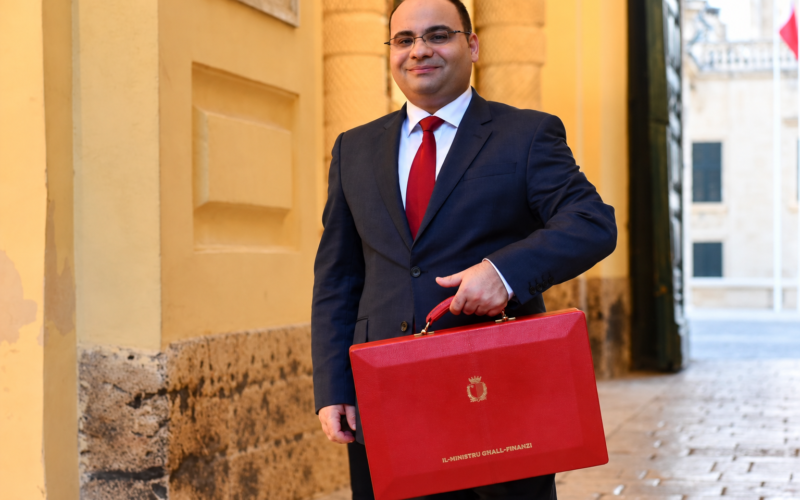
Malta’s Budget 2027, presented by Finance Minister Clyde Caruana on 26 October, introduces changes affecting foreign residents, employees, families, pensioners and business owners.
Alongside higher wages, income tax reductions for parents and increased pensions, the government has announced additional charges for third-country nationals, restrictions on access to public services and higher tourism-related fees.
For foreign nationals living in Malta, the financial impact will depend largely on their residence status, employment circumstances and eligibility for particular benefits. And, as this year’s Budget makes particularly clear, not all residents will benefit equally from the services they help finance.
Here is a practical overview of the main measures announced for 2027 and what they could mean for those living, working or doing business in Malta.
Residence permits in Budget 2027: Higher costs for third-country nationals
One of the most significant developments concerns third-country nationals (TCNs), particularly those applying for or renewing employment-related permits.
The government has announced higher application fees and an additional contribution intended to support Malta’s infrastructure.
| Measure | Announced charge |
|---|---|
| New employment permit application | €800, up from €600 |
| Additional infrastructure contribution | €400 |
| Employment permit renewals | €400 infrastructure contribution, in addition to applicable renewal fees of €150 |
The additional €400 infrastructure contribution will apply to relevant new applications and permit renewals, including those submitted by third-country nationals already living and working in Malta. Minors will be exempt.
For existing foreign workers, this means an additional cost when renewing their permits, on top of the usual renewal fees. Employers recruiting new workers from outside the EU will also need to account for the higher application charges.
The exact conditions and any further exemptions will be clarified through the implementing rules.
Malta continues to depend on foreign workers across several sectors of its economy. For those workers, however, the cost of obtaining and maintaining permission to work in the country is set to rise.
Free public transport and childcare: Changes for TCNs
From 2027, access to certain publicly funded services will be restricted for third-country nationals who do not meet the new residence requirements.
Free public transport
Free public transport will continue for Maltese citizens, qualifying EU residents and third-country nationals who meet the applicable Long-Term Residence requirements.
TCNs who do not qualify may need to pay for public transport, with an estimated monthly cost of approximately €33.
The final eligibility rules will be important for residents whose immigration status differs from their length of residence in Malta.
Free childcare
From 2027, third-country nationals without qualifying Long-Term Resident status will no longer be eligible to register their children for Malta’s free childcare scheme. Children already enrolled in the free childcare scheme will not be affected. They will continue receiving the service free of charge until they cease to qualify under the scheme’s existing age and enrolment conditions.
This transitional arrangement is particularly important for foreign families already relying on free childcare. The distinction raises a broader question about the treatment of foreign residents who live, work and pay taxes in Malta:
If third-country nationals contribute to the same tax and social security systems, should access to basic public services depend so heavily on their residence status?
The Budget 2027 makes that distinction increasingly visible, particularly for families who have established their lives in Malta but have not yet obtained Long-Term Resident status.
Driving licences: New rules and charges from 2027
Malta’s Budget 2027 introduces new charges and restrictions affecting certain foreign driving licence holders. From 1 January 2027, a new administrative charge of €83 per month will apply to certain category B and B1 driving licences when they are newly issued or renewed. Existing licences will not automatically be subject to the charge until renewal.
The following nationalities and residence categories are exempt from the announced charge:
- Citizens of EU and EEA countries
- Citizens of the United Kingdom, including British nationals after Brexit
- Citizens of Australia
- Citizens of the United Arab Emirates (UAE)
- Recognised Long-Term Residents in Malta and their spouses
- Individuals holding residence permits for specified driving-related employment
Separately, new restrictions will affect the use of certain driving licences issued outside the EU. Affected foreign licence holders will generally be permitted to drive in Malta for a maximum of 12 months, without restarting that period by leaving and re-entering the country.
For existing residence permit holders, the announced calculation refers to their last entry into Malta before 1 January 2027.
The two measures are separate: exemption from the €83 charge does not necessarily mean exemption from the rules governing the use or exchange of foreign driving licences.
For affected residents, these changes introduce yet another cost associated with everyday life in Malta, where access to a car can be essential for commuting to work.
Salaries and the 2027 cost-of-living adjustment
Employees in Malta will receive a statutory cost-of-living adjustment (COLA) of €6.41 per week in 2027, compared with €4.66 in 2026. This represents an increase of €1.75 per week over the previous year’s adjustment.
The new COLA amounts to €333.32 over a full 52-week year and forms part of employees’ remuneration rather than being paid as a separate annual benefit. The national minimum wage will also increase by €10.41 per week, including COLA.
The weekly COLA increase is intended to help wages keep pace with living costs. Whether the additional €1.75 compared with last year’s adjustment will be noticeable in household budgets is another question, particularly for families facing new residence-related charges.
A new tax-free Super Bonus
The Super Bonus was originally presented as a benefit for workers who had been in Malta for more than five years. However, the Budget announcement identifies Maltese nationals, EU workers and qualifying Long-Term Residents among the beneficiaries.
This raises an important question for third-country nationals who have worked and paid taxes in Malta for more than five years but have not obtained formal Long-Term Resident status.
Whether these workers will qualify remains to be clarified in the final eligibility rules.
If they are indeed excluded, it would represent yet another measure placing additional financial pressure on third-country nationals. With higher permit charges, restrictions on public services and new driving licence costs also announced, Budget 2027 appears to place particular emphasis on this group.
The distinction is difficult to overlook: third-country nationals remain an important part of Malta’s workforce and contribute to its public finances, yet some may face higher costs while being excluded from benefits available to other residents. Whether that is the intended outcome of the new measures deserves clarification.
Income tax reductions for parents
The Budget continues the government’s programme of income tax reductions for families with Income tax reductions for parents
Families with children will benefit from further income tax reductions in 2027, as Malta enters the second phase of its three-year tax relief programme for parents.
The changes introduce higher tax-free thresholds for qualifying families, with different rates depending on whether they have one child or two or more children.
The tax-free threshold will increase to €20,000 for married couples with one child and €30,000 for those with two or more children. Under the parent computation, the corresponding thresholds will rise to €16,000 and €24,000.
The table below provides the full 2027 income tax brackets for qualifying families with children, including the applicable rates for each income band.
| Tax computation | Annual taxable income | Taux d'imposition |
|---|---|---|
| Married – one child | €0–€20,000 | 0% |
| €20,001–€30,000 | 15% | |
| €30,001–€60,000 | 25% | |
| Over €60,000 | 35% | |
| Married – two or more children | €0–€30,000 | 0% |
| €30,001–€41,000 | 15% | |
| €41,001–€60,000 | 25% | |
| Over €60,000 | 35% | |
| Parent – one child | €0–€16,000 | 0% |
| €16,001–€24,500 | 15% | |
| €24,501–€60,000 | 25% | |
| Over €60,000 | 35% | |
| Parent – two or more children | €0–€24,000 | 0% |
| €24,001–€33,500 | 15% | |
| €33,501–€60,000 | 25% | |
| Over €60,000 | 35% |
These are progressive tax rates, meaning that each percentage applies only to the portion of income falling within the relevant bracket.
For foreign parents living and working in Malta, eligibility will depend on the applicable tax computation and statutory requirements. Further increases in the tax-free thresholds are scheduled for 2028.
Pensions, social security and family support
Malta’s Budget 2027 introduces higher pensions and additional financial assistance for families, particularly those caring for children with disabilities.
Retirement pensions will increase by €10 per week (€520 annually), including COLA. The annual tax-free pension income threshold will also rise to €37,624.
Changes to social security rules will allow spouses to transfer certain contributions to help their partners qualify for a pension. The minimum contribution period for pension eligibility will also be standardised at ten years.
No new general increase to the standard Children’s Allowance has been confirmed for 2027. However, eligible families will receive €500 for each child continuing post-secondary education.
Additional support includes an increase in the Carers’ Grant to €7,500 annually for qualifying parents of children with severe disabilities, government-funded therapies for children under 18, and higher adoption assistance of up to €13,000.
Foster parents will also benefit from ten additional days of government-funded leave, while the supplementary Orphans’ Allowance will be extended to eligible young adults in tertiary education up to age 25.
For foreign residents, entitlement to pensions and family benefits will depend on the relevant residence, contribution and eligibility requirements.
Business taxes and support for entrepreneurs
Malta’s Budget 2027 introduces a proposed 25% corporate tax rate for qualifying companies with annual turnover below €1 million, provided the profits are retained or reinvested in the business.
The standard corporate income tax rate remains 35%. Companies benefiting from the reduced rate may face additional taxation when distributing profits as dividends, bringing the overall tax rate back to 35%.
For smaller businesses, the measure could encourage reinvestment rather than immediate profit distribution. However, the reduced rate will not automatically apply to every company with turnover below €1 million.
The Budget also announces a domestic TVA reverse-charge mechanism for certain business-to-business construction services, alongside continued support for business investment, digitalisation and automation.
Foreign entrepreneurs operating as sole traders should note that the proposed corporate tax reduction does not apply to their personal business income, which remains subject to individual income tax rules.
Further details on eligibility and implementation are expected through the relevant legislation and official guidance.
Tourism and accommodation: Higher charges from 2027
Tourism-related charges are among the more substantial increases announced in the Budget.
The government intends to increase the environmental contribution paid by visitors staying in tourist accommodation, with different rates for hotels and short-let properties.
| Tourism-related charge | Announced 2027 amount |
|---|---|
| Hotel accommodation | €8 per person per night, capped at €64 |
| Short-let accommodation | €10 per person per night, capped at €80 |
| Qualifying cruise passengers | €10 |
| Visitors to Comino | €5 |
| Tourist fast ferry tickets | Additional €3 |
Tourist fares on the Gozo Channel ferry will also increase, with adult passenger tickets rising to €11 and vehicle-and-driver fares to €22.
These changes will affect visitors and tourism-related businesses, while qualifying Malta residents may continue to benefit from different fare arrangements.
Accommodation operators should prepare for the revised environmental contributions, which could reach €80 per person for short-let stays. For visitors, the additional charges will make a holiday in Malta more expensive before accommodation and transport costs are fully accounted for.
Energy subsidies and healthcare investment
The government has committed approximately €400 million to maintaining subsidies on electricity, gas and fuel during 2027.
For households and businesses, this means the government intends to continue absorbing part of the costs associated with energy prices. Further investment is also planned in Malta’s electricity distribution network and healthcare infrastructure, including improvements to Mater Dei Hospital and its emergency services.
What should foreign residents check before 2027?
Malta’s Budget 2027 brings financial relief for some households, alongside higher costs and new restrictions for others.
Foreign residents should review how the announced changes affect their residence permits, access to public services, employment benefits and tax obligations. Several measures will still require implementing legislation and official guidance before their full impact becomes clear.
For third-country nationals in particular, the Budget raises a broader question about the balance between their contribution to Malta’s economy and their access to the benefits it provides.
Malta needs foreign workers to sustain its economy. But does it value their contribution as much as it values the revenue they generate?
Disclaimer: This article is based on measures announced in Malta’s Budget 2027 on 26 October 2026 and is intended for general information only. Certain measures remain subject to implementing legislation, official guidance and individual eligibility requirements. The information does not constitute tax, immigration, employment or legal advice.




 English
 Danish
 French
 German