


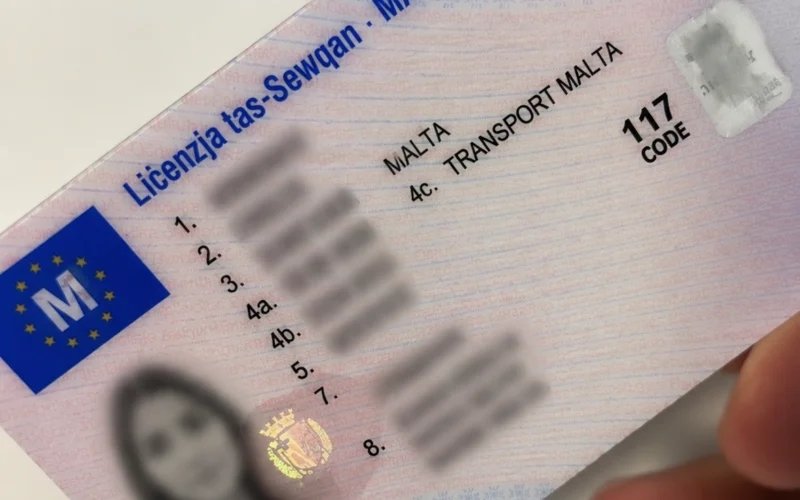
For years, one thing in Malta at least felt relatively stable for third-country nationals. You got your Maltese driving licence, renewed it every 10 years and moved on with life. Simple enough.
Not anymore.
A growing number of TCN residents in Malta are now discovering that their Maltese driving licence validity is being tied directly to the expiry date of their residence permit or single work permit, instead of the standard long-term validity many drivers were previously receiving. In practical terms, if your residence card expires in one year, your driving licence may now expire in one year too.
Make Malta home
Planning a move to Malta? Get expert guidance on Malta residency, EU registration in Malta, work permits, residence permits, and Malta citizenship programmes. We connect expats, remote workers, and business owners with trusted local legal specialists.
Get expert guidance →The Quiet Rule Shift
Transport Malta’s own guidance now clearly states:
Probationary driving licences, renewals of Driving Licences and Driving Licence amendments for Third Country Nationals will be issued according to the validity of their Residence Permit.
We contacted Transport Malta directly for clarification, and the authority confirmed the policy in writing.
According to the response received:
“From our end of the information – if the harmonised code 117 is present on the driving licence then the driving licence card will be renewed till the same date as the residence or id card. ”
In practice, this means that drivers whose licence contains harmonised code 117 may see their driving licence validity directly linked to the expiry date of their residence documentation. For many TCN residents, that confirmation removed any remaining doubt that this is no longer simply confusion circulating in expat groups, but an actual administrative practice being applied.
Historically, Maltese driving licences generally followed standard EU-style validity periods:
- 10 years for most drivers under 70
- shorter periods for elderly drivers or special licence categories
Once issued, the licence itself was generally treated independently from immigration status.
Legally, Can Malta Do This?
Technically, yes.
The legal basis appears to come from Subsidiary Legislation 65.18, le Motor Vehicles (Driving Licences) Regulations, particularly the Ninth Schedule, which allows Transport Malte to issue certain driving licence validity periods on a pro-rata basis and attach administrative conditions to licences issued to third-country nationals.
In other words, Malta is not simply improvising this policy internally. There is an actual regulatory framework allowing the authority to connect the validity of a Maltese driving licence to the holder’s residence status. And realistically, the reasoning behind it is not difficult to understand.
Malta has faced increasing pressure around residency compliance, permit abuse, and cases of TCN overstays in recent years. Tying driving licence validity directly to the residence permit effectively creates another layer of administrative control, ensuring that long-term driving entitlements remain linked to a person’s legal residency status in Malta.
From a purely legal perspective, Malta likely does have room to do this under both national regulations and the wider flexibility EU Member States retain regarding third-country nationals.
The Real Problem Is Not the Fee
Some people will immediately say: “But the licence renewal itself is not expensive.” True. That is not really the point.
The problem is the endless cycle of dependency on Malta’s administrative machinery. Because anyone who has lived here long enough knows that a one-year permit rarely means a simple one-year process.
It often means: appointment delays, waiting periods, system errors… Meanwhile, life continues. People still need to drive to work, take children to school, deliver food, operate taxis, travel between jobs, and function like normal residents..
Ironically, someone using their original foreign driving licence may still legally drive in Malta for up to one year after re-entering the country. But many TCNs today hold only a Maltese driving licence, and that creates a completely different problem.
If a person gets stuck in a delayed renewal process, compliance procedures, a change of employer, pending approvals, or Malta’s endless administrative backlog, their residence card may expire before the new one is issued. And once the ID expires, renewing the driving licence may suddenly become impossible too.
Which means: no valid licence, no driving.
For someone depending on a car every day, this is far more than a small inconvenience. So yes, yet another reminder for TCNs in Malta to start renewals early, approach job changes carefully, monitor permit timelines closely, and always keep eye on the expiry date of ID card.
Because TCNs in Malta increasingly live through what can only be described as “conditional administration”. Everything depends on something else:
- your employment depends on your single permit;
- your ID depends on your employer;
- your residency depends on having the right rental paperwork;
- and now your driving licence depends on your ID too.
Réflexions finales
This is not just about driving. It is about a growing feeling among third country residents that almost every aspect of life in Malta is becoming conditional, temporary, renewable, and administratively fragile.
One document now controls another.
Which controls another..
Which controls another…





 English
  Danish
  French
  German