



Malta’s tax system is built around a straightforward principle: foreign income brought into Malta is taxed, foreign income kept abroad generally isn’t. For retirees whose income comes from pensions and investments rather than local employment, that structure can be genuinely advantageous, and the Malta Retirement Programme is the version of it designed specifically for them.
Unlike a standard residence permit, the MRP is a formal tax status. It sets out defined conditions, a flat rate of tax on remitted pension income, and a minimum annual liability – in exchange for certainty and, for those who qualify, a more flexible approach to how much time they actually spend on the island.
What is the Malta Retirement Programme?
Die Malta Retirement Programme, often referred to as the MRP, is a special tax status programme for individuals who are not in employment and who receive a pension as their regular source of income.
It is available to EU, EEA, Swiss and non-EU nationals, provided the applicant satisfies the programme conditions. The programme is particularly relevant for retirees whose pension income is paid from abroad and who want to establish a recognised residence position in Malta.
Under the MRP, qualifying foreign-source income received in Malta is taxed at a flat rate of 15%, subject to a minimum annual tax. Other income that does not fall under the programme rules may be taxed at 35%.
Why Retirees May Choose MRP Instead of Ordinary Residence
Many EU retirees first look at ordinary residence or Selbstversorger residence in Malta. This can work well where the person genuinely lives in Malta on a regular and settled basis.
However, ordinary tax residence often raises the practical question of physical presence. A person who spends more than 183 days in Malta in a year is generally considered tax resident in Malta. Someone who comes to Malta to establish residence may also be treated as resident from arrival, depending on the facts.
The MRP can be useful for retirees who want Malta as their principal residence but still spend meaningful time abroad. The programme requires the beneficiary to reside in Malta for at least 90 days per year, averaged over a five-year period, and not to spend more than 183 days in any other single jurisdiction in a calendar year.
This is an important distinction. For retirees who live between two countries, the MRP may offer a clearer framework than relying only on ordinary residence rules.
Entry Requirements
Throughout their participation in the programme, applicants must demonstrate a genuine connection to Malta, maintain suitable accommodation, and comply with a number of ongoing tax, residency, and conduct requirements.
To qualify, applicants must:
- receive a pension constituting at least 75% of their total chargeable income;
- have that pension remitted to and received in Malta;
- own or rent qualifying residential property in Malta;
- designate Malta as their principal place of residence worldwide;
- hold adequate healthcare cover, either through a private insurance policy or, where applicable, a valid S1-Zertifikat;
- demonstrate stable and regular financial resources sufficient to support themselves and any dependants; and
- pass the fit and proper test (background assessment carried out by the Maltese authorities to ensure that applicants are of good character and pose no financial, legal, or reputational risk. It typically involves checks on criminal history, financial integrity, and any past regulatory or legal proceedings).
Applicants may not take up employment in Malta. However, they may hold a non-executive directorship on the board of a Malta-resident company. Beneficiaries must not be domiciled in Malta and must be able to communicate adequately in English or Maltese.
Anforderungen an das Eigentum
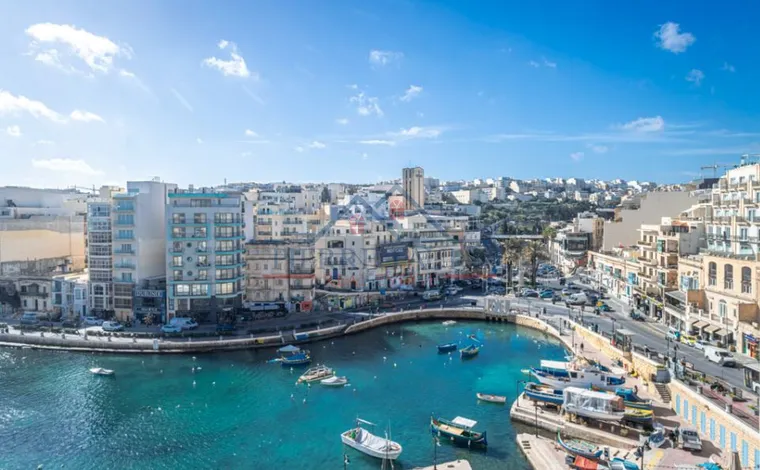
The applicant must either buy or rent qualifying property.
For owned property, the minimum value is generally:
- €275,000 for property in Malta other than Gozo or the south of Malta;
- €220,000 for property in Gozo or the south of Malta.
For rented property, the minimum annual rent is:
- €9,600 per year for property in Malta other than Gozo or the south of Malta;
- €8,750 per year for property in Gozo or the south of Malta.
The property must be used as the applicant’s principal residence worldwide. It may not be let or sub-let, and only the beneficiary, dependants and approved household staff may reside there.
Healthcare Requirements
Healthcare cover is an important part of the application. EU, EEA and Swiss retirees receiving a state pension from another EU country may often qualify for an S1-Zertifikat issued by their home country’s social security authority. Once registered in Malta, the S1-Zertifikat allows access to Malta’s public healthcare system while the cost of care remains covered by the pension-paying state.
Non-EU retirees are generally required to hold comprehensive private Krankenversicherung that provides full coverage in Malta and across the European Union. Applicants should ensure that their healthcare arrangements satisfy programme requirements before submitting an application.
Tax Treatment Under the MRP
The core tax benefit is the 15% rate on foreign-source income received in Malta by the beneficiary and qualifying family members.
For retirees, this usually means that foreign pension income brought into Malta is taxed at 15%, subject to the minimum tax. The pension must be received in Malta, so in practice the pension should be paid into or remitted to a Malta bank account.
The minimum annual tax is:
- €7,500 for the main beneficiary;
- €500 per year for every dependant and household staff member.
This minimum tax applies even if the calculated 15% tax would be lower. Any other income that does not qualify under the MRP rules may be taxed at 35%. This is why retirees should not look only at the pension rate. A proper review of all income sources is needed before applying.
Tax Return Deadlines
MRP beneficiaries should expect to file an annual Malta income tax return. The usual deadline for a manual personal tax return is 30 June following the relevant tax year. If the return is filed electronically, the deadline is generally 31 July.
Any tax due should be settled on time. Late filing, inaccurate declarations or failure to respond to requests from the Commissioner for Revenue may put the special tax status at risk.
What “Non-Domiciled” Means in Practice
The MRP is designed for individuals who are resident in Malta but not domiciled in Malta. Domicile is different from residence. It is a deeper legal concept connected to a person’s permanent home and long-term intention.
A retiree may be resident in Malta while remaining non-domiciled, for example where their permanent origin and long-term ties remain outside Malta. Under Malta’s remittance basis of taxation, non-domiciled individuals are generally taxed in Malta on Malta-source income and on foreign income received in Malta.
For MRP beneficiaries, qualifying foreign income received in Malta benefits from the 15% rate. Foreign income not received in Malta may require separate advice, depending on the person’s circumstances and tax position in the other country.
Annual Obligations and Renewals
The residence card may be issued for five years, but this does not mean the programme can be ignored for five years.
The MRP carries annual compliance obligations. The beneficiary must continue to satisfy the programme conditions, retain qualifying property, maintain healthcare cover, receive the pension in Malta, respect the residence-day rules, and submit the required annual declaration together with the income tax return.
For the first five years, this annual compliance check is especially important because the 90-day Malta presence requirement is measured as an average over a five-year period.
Key Costs to Consider
Before applying for the Malta Retirement Programme, retirees should consider both the initial and ongoing costs associated with the scheme. The application is subject to a non-refundable administrative fee of €2,500, while applicants must also either purchase or rent qualifying property in Malta in line with the programme requirements. Beneficiaries are required to pay a minimum annual tax of €7,500, with an additional €500 payable for each dependant or approved household staff member included under the programme. Depending on individual circumstances, applicants may also need private health insurance or, where eligible, register an S1 certificate.
In addition, most applicants choose to engage professional advisors to assist with the application process, tax compliance obligations and ongoing renewals, which should also be factored into the overall cost of participating in the programme.
Is the Malta Retirement Programme Right for You?
Before applying, it is worth taking a step back to consider whether the Malta Retirement Programme genuinely aligns with your retirement plans. The programme works best for individuals whose primary source of income is a pension, who wish to establish Malta as their principal residence, and who are comfortable meeting the ongoing compliance and tax obligations that come with it. It is also important to reflect on how the programme interacts with your tax position in your home country, particularly if you intend to divide your time between Malta and another jurisdiction.
The MRP may be especially well-suited to retirees who want a formal Malta-based structure, derive most of their income from a pension, and split their time between Malta and elsewhere. An EU retiree who does not wish to spend more than 183 days a year in Malta but still wants to establish Malta as a genuine retirement base, for instance, may find the MRP more practical than relying on ordinary residence alone. The programme also offers useful clarity on how foreign pension income will be taxed once received in Malta.
That said, the MRP is not the right fit for everyone. It carries real obligations — a minimum annual tax liability, qualifying property requirements, annual filings, and careful management of time spent in and outside Malta. Prospective applicants should weigh these demands honestly before committing to the programme.
Ultimately, the decision should not rest on the 15% tax rate alone. The full picture matters: pension source, bank remittances, domicile status, foreign tax exposure, property plans, healthcare arrangements, and ongoing compliance all need to be carefully considered before committing.
Interested in the Malta Retirement Programme? Click the button below to request your free 15-minute introductory call and discuss your options with our partner, GB Legal. As a licensed Malta-based law firm, their team can help you understand the requirements, assess your eligibility and guide you through the application process.
KONTAKTIEREN SIE UNS
Planen Sie eine Konsultation
Haftungsausschluss
This article is intended for general informational purposes only and should not be considered legal, tax, financial or immigration advice. While every effort has been made to ensure the accuracy of the information at the time of publication, Malta’s tax and residency rules may change, and individual circumstances can lead to different outcomes. The tax-related information published has been reviewed with input from our professional partners.





 English
  Danish
  French
  German