


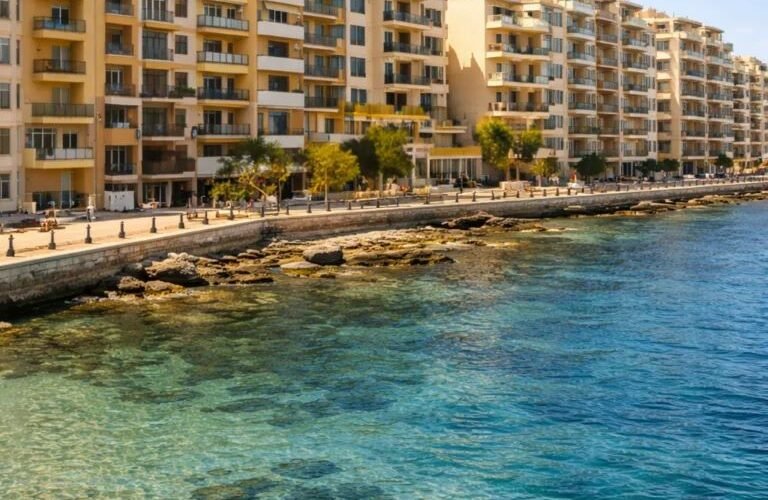
Securing a visa or residency in Malta requires more than just background checks and proof of funds; it requires a front door. The pragmatic move is renting property. Securing a rental property in Malta provides the mandatory local address required by immigration authorities. It also buys you a year to assess the real estate market before tying up capital in a property purchase.
Yet, the Maltese state does not treat all leases equally. The rules governing your rental contract depend entirely on your chosen Malta visa or residency program. Some routes impose strict minimum financial thresholds on your rent, while others simply demand proof of legal accommodation. Understanding these exact requirements early on is the most effective way to prevent administrative bottlenecks.
Find your place in Malta
Looking to buy property in Malta, rent a home in Malta, or explore Malta real estate investment opportunities? We help you navigate the local market, understand property regulations, and connect with trusted professionals across Malta.
Explore Malta property options →The Bureaucratic Reality: Registration and “The Certificate”
Most Malta residency and visa applications require strict proof of accommodation, which usually means presenting a registered long-term rental agreement.
Here is the central paradox of the Maltese immigration process: Your visa relies on your landlord’s administrative competence.
By law, your landlord has exactly 30 days from the start of the lease to register the contract with the Maltese Housing Authority. This system (under the Private Residential Leases Act) was introduced to drag the rental market into the light, ensuring transparency and legal protection. It has been highly effective; as of recent 2025 data, the Housing Authority now manages over 70,000 active registered rental contracts on the island.
When your landlord successfully registers your property online, the system generates an official Housing Authority Registration Certificate (often referred to as an approval letter).
How Big Does the Property Need to Be?
While visa authorities rarely arrive with a tape measure to check your square footage, Maltese rental law does impose clear occupancy limits designed to prevent overcrowding. Current regulations generally allow a maximum of two residents per bedroom, with an absolute cap of ten occupants per property, primarily targeting large house shares.
In practice, this means a one-bedroom apartment is suitable for a single professional or a couple, while larger households require more bedrooms. If you are applying for residency with dependents, authorities will expect accommodation that realistically matches the family size.
In addition, some residence and visa programmes, particularly for non-EU applicants, require a Declaration of Good State of Property issued by a warranted architect. This document confirms that the property is structurally sound, compliant with planning regulations, and suitable for habitation, including that the size and layout of the property adequately accommodate the number of occupants declared in the application.
As a practical guideline, around 55 sqm is often considered the minimum habitable size for a single applicant, with larger properties expected when additional family members are included.
Rental Requirements by Residency Program
Different visa routes demand different levels of financial commitment. Here is how the rental requirements fit into the main schemes, along with the precise administrative hoop you need to jump through.
Malta Permanent Residence Programme (MPRP)
The Malta Permanent Residence Programme (MPRP) is a long-term residency option for non-EU nationals seeking permanent residence in Malta. Applicants may either purchase property or rent qualifying accommodation. If renting, the property must have a minimum annual lease value of €14,000 (around €1,170 per month), and the lease must be maintained for at least five years. The lease agreement must be formally registered with the Housing Authority and submitted as part of the residency application.
- Your Action Step: Secure a qualifying long-term lease that meets the programme’s rental threshold and ensure it is properly registered before submitting your application to Residency Malta Agency.
Global Residence Programme (GRP) & Malta Retirement Programme (MRP)
The Global Residence Programme (GRP) is a tax residency framework designed for non-EU nationals, offering a favourable tax treatment on foreign income remitted to Malta. Unlike investment-based residency schemes, GRP focuses primarily on tax residency and requires applicants to secure qualifying accommodation. The minimum rental threshold is €9,600 per year for properties located in central or northern Malta, or €8,750 per year for properties in Gozo or the south of Malta.
The Malta Retirement Programme (MRP), aimed at retirees receiving a regular pension, applies the same minimum property rental thresholds. In both programmes, the lease agreement must be registered with the Housing Authority, after which a copy of the registered contract is typically submitted as part of the application to the Commissioner for Revenue.
- Your Action Step: Ensure that your rental agreement meets the programme’s minimum thresholds and that the lease is properly registered with the Housing Authority before submitting it with your residency application.
Single Work Permit, Key Employee Initiative (KEI) & Specialist Employee Initiative (SEI)
These programmes represent the main employment-based residence routes for non-EU nationals working in Malta. The Single Permit is the standard work and residence authorisation, while the Key Employee Initiative (KEI) and Specialist Employee Initiative (SEI) provide fast-track processing for highly skilled professionals and senior employees.
Applicants must provide a long-term rental agreement registered with the Housing Authority, together with the lease attestation form, as proof of legal accommodation in Malta.
When family members are included in the application, authorities may also request a Declaration of Good State of Property, issued by a warranted architect, confirming that the residence is suitable for habitation.
- Your Action Step: Ensure your long-term lease is registered with the Housing Authority, the lease attestation form is completed, and if applying with family members, obtain a Declaration of Good State of Property before submitting your application.
Malta Nomad Residence Permit
Targeting remote workers and digital professionals, the Malta Nomad Residence Permit allows individuals employed or self-employed outside Malta to live on the island while continuing to work remotely. There is no minimum rental value requirement, but applicants must demonstrate that they have suitable accommodation in Malta.
Applicants applying from abroad may initially provide temporary accommodation, such as a hotel or Airbnb booking. However, a longer-term lease is typically required once the application is approved and before the residence card is issued.
- Your Action Step:When submitting your Nomad Residence Permit application through the Expatriates Unit portal, upload proof of accommodation in Malta: either a temporary booking for the initial stage or a signed lease agreement if already secured.
Malta Start-Up Residence Programme (MSRP)
Designed for non-EU entrepreneurs launching innovative businesses in Malta, this programme does not impose a minimum property purchase or rental value. Applicants must simply demonstrate that they have suitable accommodation in Malta, typically through a long-term lease agreement registered with the Housing Authority.
- Your Action Step: Secure a registered rental agreement and include it as proof of accommodation when submitting your Start-Up Residence application to Residency Malta Agency.
Residence in Malta for EU Nationals
EU citizens exercising their treaty rights require no minimum rental value.
- Your Action Step: Upload your rental agreement together with the other required documents, depending on your application route (employment or self-sufficient residence). The accommodation requirements are generally the same for both pathways.
The Market in Numbers
When looking for a rental property in Malta, you are entering a highly competitive, fast-moving arena. The island’s total population recently surged past 574,000, and nearly 30% of those residents are now foreign nationals. Driven by the gaming sector, financial services, and a steady influx of digital nomads, this demographic shift has fundamentally altered the housing landscape.
Rents have risen sharply in response to this demand. Recent market studies noted that the cost of an average two-bedroom apartment jumped by over 28% between 2022 and 2024 alone. While prices fluctuate with the prevailing winds of demand and seasonality, typical market rates for 2025/2026 sit roughly here:
- Seafront in Sliema or St Julian’s: €1,400 to €2,500+ per month. (High expat demand and premium sea views; a standard 2-bedroom here easily commands €1,400+).
- Central Gzira, Msida, or Ta’ Xbiex: €1,000 to €1,400 per month. (The pragmatic choice for working professionals wanting proximity to the commercial centers).
- Northern Hubs (St. Paul’s Bay / Mellieħa): €850 to €1,100 per month. (Currently the region with the highest volume of registered contracts, balancing cost with coastal access).
- Inland Villages: €750 to €1,000 per month. (A quieter, more traditional, and infinitely more parking-friendly lifestyle).
- Gozo: €700 to €900 per month. (More space, lower prices, and a much slower pace of life across the water).

Red Flags for Renters
Most property transactions are highly standardized, but newcomers should watch for a few classic pitfalls:
- The “Pre-Viewing” Deposit: Scammers occasionally list phantom properties and demand a holding deposit before a viewing. Never part with capital before standing inside the property.
- The Unregistered Lease: A landlord who suggests keeping the arrangement “off the books” to save on tax is effectively torpedoing your visa application. Insist on formal registration.
- The Illicit Sublet: Renting a room from a tenant who doesn’t have the landlord’s explicit permission to sublet leaves you with an invalid contract, and zero leverage with immigration authorities.

Rent First, Buy Later
Many applicants arrive on the island carrying the assumption that they should purchase property immediately. Experienced advisors routinely suggest the exact opposite.
Malta is tiny – just 316 square kilometers, but its micro-geography dictates its lifestyle. One postcode offers bustling nightlife and gridlock; a fifteen-minute drive away offers sleepy village squares and church bells. Spending a year renting satisfies your residency requirements, allows you to properly assess the market, and prevents the uniquely expensive error of buying a house in the wrong village. And if you eventually consider purchasing property, renting first ensures that decision is based on experience rather than assumption.
If you are planning to relocate and need help finding suitable accommodation, we collaborate with trusted real estate partners across Malta and Gozo. Feel free to reach out if you would like to be connected with professionals who understand the specific requirements of residency applications.
GET IN TOUCH
Schedule a Consultation
For more practical insights on relocation, residency, and business life in Malta, follow us on our social media channels and stay updated with our latest guides.





 English
  Danish
  French
  German