


Whether you’re starting the day with an early morning swim or spending a weekend at your favourite bay, clean bathing water is something many of us take for granted. Behind every refreshing dip, however, is a rigorous monitoring programme that helps ensure Malta’s beaches remain safe for residents and visitors alike.
Our latest analysis of Malta’s bathing water data shows that the vast majority of monitored beaches continue to achieve excellent microbiological standards, reinforcing the country’s reputation as one of the Mediterranean’s premier swimming destinations.
This analysis was prepared by our Data Scientist, Eliseo Kolicaj, who reviewed the latest bathing water results to identify trends and provide a clearer picture of water quality across Malta and Gozo.
Wichtigste Ergebnisse
The latest analysis of Malta’s bathing water monitoring data reveals several encouraging trends:
- 🌊 78% of monitored bathing sites achieved an Ausgezeichnet bathing water classification.
- ✅ Only one beach received a Poor classification, while the vast majority remained suitable for swimming.
- 📍 Beaches across Marsaskala, Birżebbuġa, Mellieħa and the south of Malta continued to record consistently strong results.
- 🏝️ Popular destinations, including Blaue Lagune und San Niklaw in Comino, maintained a Gut classification, meaning they remain suitable for bathing despite not reaching the Excellent category.
- 🧪 Continuous microbiological monitoring helps identify temporary changes in water quality, allowing authorities to respond quickly whenever precautionary measures are needed.
A Strong Overall Picture
Eliseo Kolicaj, our Data Scientist, explains:
The overall picture remains very encouraging. While individual beaches may occasionally record lower classifications because of temporary environmental factors, the data demonstrates that Malta continues to maintain consistently high bathing water quality across the vast majority of monitored sites. This is exactly why regular monitoring is so valuable, as it helps identify isolated changes without losing sight of the broader trend.
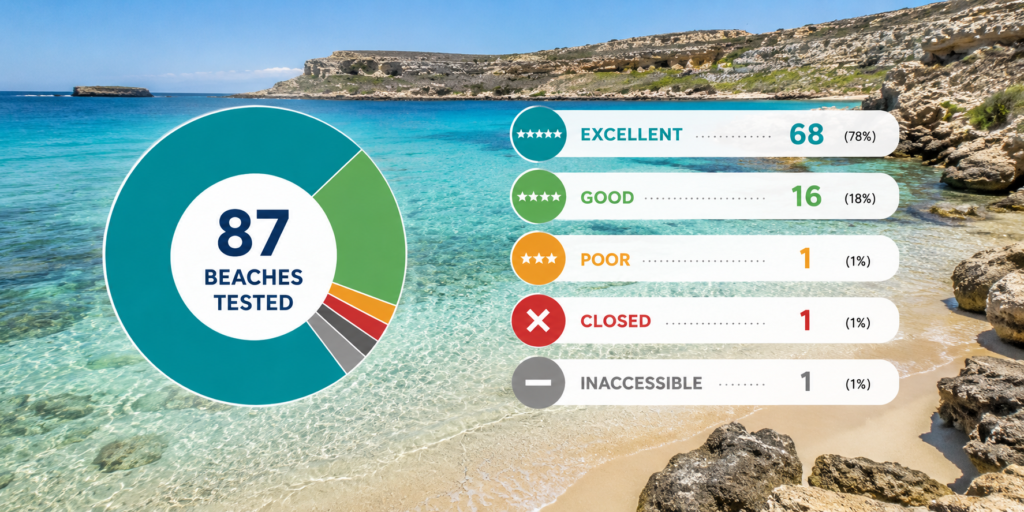
Out of 87 monitored bathing sites:
- 68 beaches (78%) achieved an Ausgezeichnet classification.
- 16 beaches (18%) were rated Gut.
- One site was classified as Poor.
- One beach remained closed.
- One location could not be sampled because it was inaccessible.
These figures highlight the consistently high standard of Malta’s bathing waters, with the overwhelming majority of monitored sites considered excellent for swimming.
What Do These Ratings Mean?
Bathing water quality is assessed using two internationally recognised microbiological indicators:
- Escherichia coli (E. coli)
- Intestinal Enterococci
Rather than measuring how clear the water looks, these indicators help identify potential contamination that may not be visible to the naked eye. Low bacterial levels generally indicate clean, safe bathing water, while elevated readings can prompt additional monitoring or precautionary measures. Put simply, the water may look crystal clear, but science is what confirms it’s safe to enjoy.
Beaches That Continue to Perform Well
Many of Malta’s best-known swimming spots achieved an Ausgezeichnet classification, including:
- Pretty Bay
- Wied iż-Żurrieq
- St Thomas Bay
- Jerma Bay
- Pembroke Pool
- Xgħajra Beach
- Numerous bathing areas across Mellieħa, Marsaskala and Birżebbuġa
These results reflect the consistently high quality found across much of Malta’s coastline.
Not Every Beach Tells the Same Story
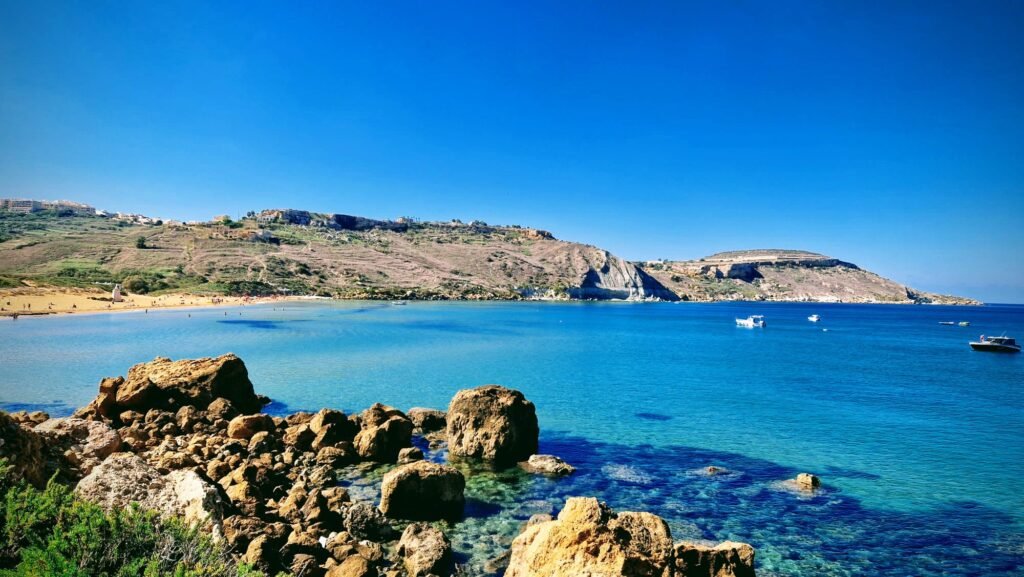
Although the overall picture is very positive, not every location received the highest classification. A number of beaches were rated Gut, including Balluta Bay, Gnejna Bay, Għajn Tuffieħa (left side), Golden Bay (left side), Blue Lagoon and San Niklaw in Comino, Perched Beach, Ramla-Bucht (right side) and the Dwejra Inland Sea. A Gut classification still indicates that the water is suitable for bathing. It simply means the microbiological results were slightly below the threshold for an Excellent rating.
Inzwischen, St George’s Bay (right side), St Julian’s, was the only monitored site to receive a Poor classification following an elevated E. coli reading. This does not necessarily reflect the beach’s long-term quality, as temporary factors such as heavy rainfall, surface water runoff or other local environmental conditions can influence individual sampling results.
Why Continuous Monitoring Matters
Bathing water quality is never static. Weather conditions, sea currents, rainfall and surrounding activities can all affect microbiological readings from one sampling period to the next.
Occasionally, beaches may also be temporarily closed or bathing discouraged as a precaution. This does not automatically mean a beach has a long-term pollution problem. Temporary restrictions can follow events such as heavy rainfall, stormwater runoff, infrastructure incidents or naturally occurring marine phenomena that may affect water quality for a short period. Once follow-up testing confirms that the water is safe again, bathing restrictions are lifted.
This is precisely why continuous monitoring is so important. It allows the authorities to respond quickly, investigate unusual results and provide the public with reliable information based on scientific evidence rather than appearance alone.
Malta’s Coastline Continues to Set a High Standard
Perhaps the biggest takeaway from the latest analysis is not that one beach received a lower classification, but that regular monitoring allows these changes to be identified quickly and addressed where necessary. When almost four out of every five monitored bathing sites achieve an Excellent rating, the data reinforces Malta’s reputation for high-quality bathing waters while reminding us that protecting them is an ongoing responsibility rather than a one-off achievement.
Check Before You Swim
Water quality can occasionally change due to weather, pollution incidents or other temporary factors. For the most up-to-date information, swimmers can check the Environmental Health Directorate’s Bathing Water Programme, which publishes regular monitoring results and classifications for official swimming sites across Malta, Gozo and Comino.
The Directorate also provides an online Bathing Water Portal, where the public can check current information on monitored locations, including sites that may temporarily not be recommended for swimming.





 English
  Danish
  French
  German