



For many people moving to Malta, the internet is something they don’t think about until after they’ve arrived. Only then do questions start to appear.
Which provider should I choose? Is fibre available everywhere? Why does my mobile signal disappear inside the apartment? And is 5G really available across the islands?
The good news is that Malta has one of Europe’s most advanced digital infrastructures. High-speed fibre broadband is widely available, 5G networks continue to expand, and most residents can choose between several competitive providers.
The less obvious reality is that your experience depends on far more than the name of the provider.
A Small Country Doesn’t Mean Equal Coverage
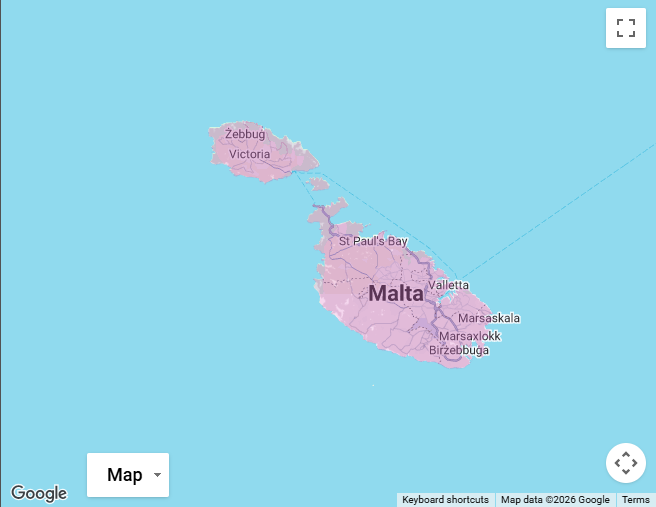
Looking at Malta on a map, it’s easy to assume internet coverage is identical everywhere. After all, the islands are small, and travelling from one end to the other takes less than an hour.
In reality, where you live can make a noticeable difference.
Someone renting a modern apartment in Sliema may enjoy excellent indoor 5G reception and gigabit fibre, while another person living in a townhouse in Rabat or Mdina could experience weak mobile signal despite living only a few kilometres away. The reason is not necessarily the network itself.
Many of Malta’s traditional buildings were constructed using thick limestone walls. While these buildings are beautiful and naturally cool during the summer months, they can significantly reduce mobile signal indoors. In many historic cores, narrow streets and dense construction can also affect reception, particularly inside lower floors or properties with few external windows. Network providers themselves note that coverage maps represent estimated outdoor coverage and cannot guarantee indoor reception.
This often surprises newcomers, who assume changing providers will immediately solve the problem. Sometimes it does, but in many cases, the building itself is the biggest factor.
Check Coverage Before You Choose a Provider
If reliable internet is important to you, particularly if you work remotely or rely on mobile data throughout the day – it’s worth checking network coverage before signing a contract.
One useful tool is nPerf’s interactive Malta coverage map, which allows you to view estimated 2G, 3G, 4G and 5G coverage across the islands and compare the three main mobile operators based on real-world measurements submitted by users. Unlike provider marketing material, the map is continuously updated with data collected from thousands of devices, giving a practical indication of network performance in different localities.

Malta’s Three Main Providers
Most residents choose between GO, Melitaund Epic.
All three offer fibre broadband, mobile services, television packages, and business solutions. Competition between them is strong, which has helped Malta maintain relatively fast internet speeds and competitive pricing compared with many European countries.
Rather than asking which provider is “the best”, a better question is which one performs best at your address . A neighbour’s experience is often more valuable than any advertising campaign.
Why Fibre Availability Matters
Although fibre coverage has expanded significantly across Malta and Gozo, availability should never be assumed simply because a provider advertises nationwide service.
Sometimes fibre reaches the street but has not yet been installed inside the building. In older properties, additional installation work may be required before the service can be activated. This is particularly relevant for tenants moving into older houses or converted townhouses.
Before signing either a tenancy agreement or an internet contract, it’s worth confirming whether fibre is already installed at the property, how long activation normally takes, and whether installation costs are included.
What About Gozo?
Many people relocating to Gozo expect internet speeds to be significantly slower than in Malta. Today, this is generally no longer the case.
Fibre broadband is available across much of the island, and all three major providers operate mobile networks in Gozo. Nevertheless, as with Malta, individual locations can produce different results, particularly in rural areas or inside traditional stone buildings.
Wi-Fi Calling
If you’ve ever noticed that your phone suddenly loses signal after walking inside your home, you’re not alone.
Fortunately, most modern smartphones now support Wi-Fi Calling.
Instead of relying solely on the mobile network, calls are automatically routed through your home internet connection whenever mobile reception is poor. For people living in older Maltese buildings, this can make a significant difference without changing providers or purchasing additional equipment. It’s a feature worth enabling if your handset and mobile operator support it.
How do you activate it?
With GO and Melita you can simple activate it following simple instructions:
Auf iPhone:
- Open Settings.
- Tap Mobile Service (oder Cellular).
- Select Wi-Fi Calling.
- Turn Wi-Fi Calling on This iPhone zu Auf.
Auf Android (may vary slightly by manufacturer):
- Open Settings.
- Tap Connections, Network & Internet, oder SIM & Mobile Network.
- Select Wi-Fi Calling.
- Enable the feature.
Questions Worth Asking Before You Sign
Before committing to a home internet or mobile contract, check whether fibre is already available at the property, how long installation is likely to take, whether there is a minimum contract period, and if the service can be transferred should you move. If you’re renting, it’s also worth asking whether internet equipment is already installed and which provider previously serviced the property.
You should also check mobile coverage for your exact location using the provider’s own tools or an independent platform such as nPerf. Spending a few extra minutes doing so can help set realistic expectations and avoid surprises once you’ve settled into your new home.




 English
  Danish
  French
  German