


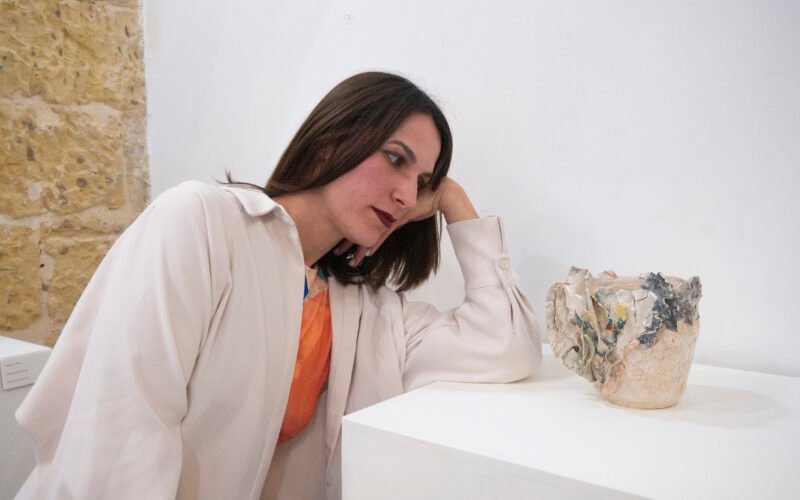
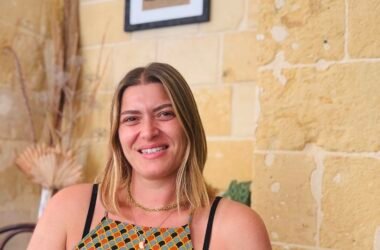
Some artists arrive at their craft through a single, defining moment. Liliya Pangelova arrived through decades of movement. Born in Bulgaria, shaped by Istanbul’s creative energy, and refined across glass workshops in the Czech Republic, Germany, and the Netherlands, she eventually found herself on the quiet limestone island of Gozo, a place she never planned to stay, and now cannot imagine leaving.
Today, Liliya works across ceramics, sculpture, and mixed media, building an artistic practice rooted in transformation, impermanence, and emotional honesty. She teaches full-time, raises a family, and continues producing work that collectors and fellow artists alike have responded to with remarkable warmth. In conversation, she is thoughtful, unhurried, and refreshingly candid – about doubt, belonging, the weight of migration, and what it finally feels like to trust your own creative voice.
New Beginnings
1. What first brought you from Bulgaria to Gozo, and how did your artistic journey begin before relocating to Malta?
Art has always been part of my life. I studied fine arts from a very young age and later specialised in porcelain and glass design at the National Academy of Arts in Sofia. But alongside art, I always carried another strong desire, the desire to explore the world.
At that time, Bulgaria still felt more closed and restrictive compared to today. I was young, curious, and deeply attracted to other cultures, languages, and ways of living. So in my twenties, I moved to Istanbul, where I completed a master’s degree in ceramics and glass design. It was there that I became fully fascinated by glassblowing — this physically demanding, unpredictable craft that felt almost alive in your hands.
After Turkey, I I became an apprentice throughout Europe, working in glass factories in the Czech Republic, Germany, and the Netherlands. I was constantly learning, moving, adapting. Looking back, I realise those years shaped me not only as an artist, but as a person.
Gozo entered my life unexpectedly. In 2016, I contacted Gozo Glass in Ta’ Dbieġi for a trial opportunity, thinking it would simply be another temporary chapter. But life slowly changed direction. I built a family here, learned Maltese, and little by little the island became part of me.
I didn’t want to remain only an observer. I wanted to understand the place where I was living.
2. You eventually transitioned from glass factories into teaching. Was that a difficult decision?
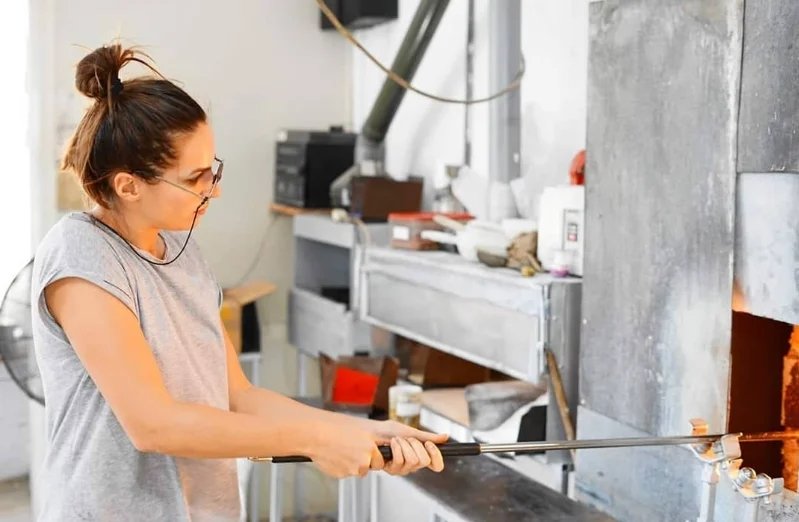
Indeed difficult, especially because I never imagined myself becoming a teacher. For many years, my life revolved around workshops, furnaces, and production spaces. But after some time, especially after Covid, I sensed that I needed a new challenge. I still wanted to retain art as central, but in a context of more human connection and stability.
That is when I completed my second master’s degree at the University of Malta and eventually moved into teaching visual arts full-time. What surprised me most is how much I genuinely enjoy education. Teaching teenagers and adults is emotionally complex in completely different ways. Teenagers need sensitivity and trust, while adults need respect and a quiet sense of authority. Every classroom becomes its own little world.
3. You also learned Maltese after relocating. How important was language in helping you feel part of Gozo?
For me, it was essential step in my career. I never wanted to live inside a foreign country abroad without comprehending the world around me. Learning Maltese was not only practical, it is opportunity to connect with humour, silence, mentality, traditions. It changes the way people open themselves to you.
Of course, there are still moments where I struggle, especially with when it comes to sophisticated speech such as poetry or abstract conversations. To fully understand literature in another language requires deep cultural immersion.
Learning Maltese helped me stop feeling like an feel less like an outsider looking through a window.
Discover Lilliya’s Artistic World
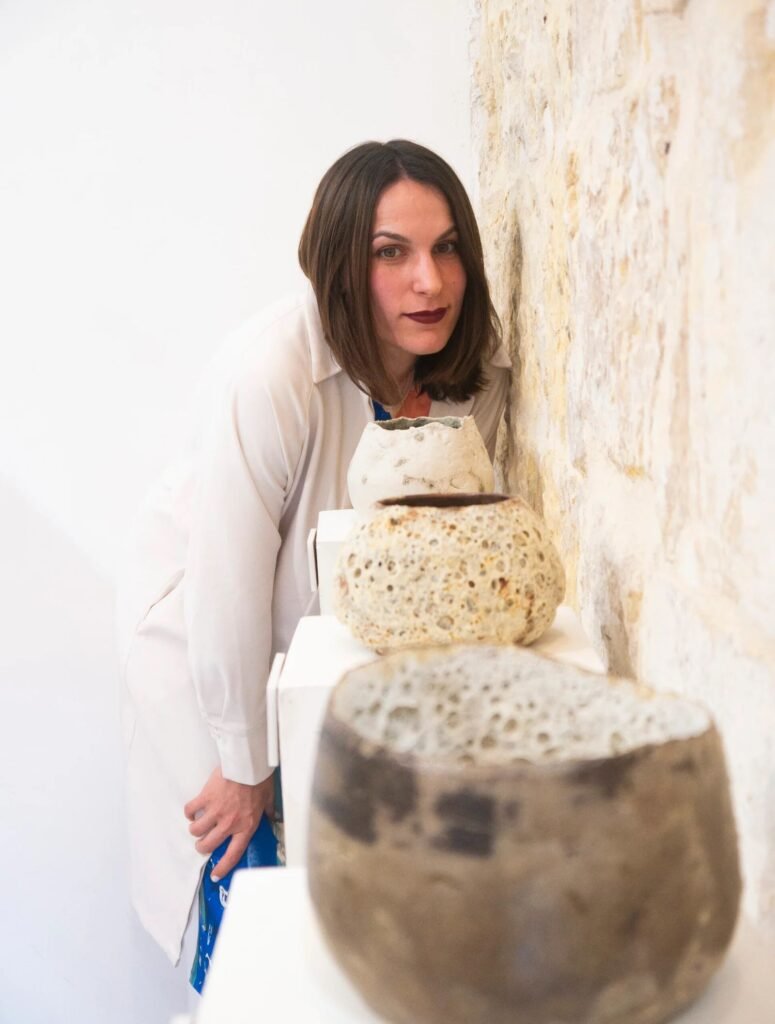
Alongside her work as an educator, Lilliya continues developing her independent artistic practice through sculpture, ceramics, mixed media, and conceptual experimentation inspired by movement, transformation, and Mediterranean textures.
Readers interested in following Lilly’s past and upcoming exhibitions, studio work, and artistic journey – visit her website or connect through her social media pages.
Her work reflects not only craftsmanship, but also a deeply personal dialogue between migration, belonging, motherhood, and transformation.
Shaping Identity Through Art
4. How do you see Gozo’s artistic and cultural scene evolving today?
I think the transformation is very visible. Back in 2016, there were far fewer artistic initiatives. Today we have access to festivals, residencies, exhibitions, collaborations, and more appreciation for contemporary art practices. Gozo is slowly becoming more culturally ambitious.
Recently, I applied for a project connected to the “Victoria 31” initiative, which aims to position Gozo as a future cultural capital. That kind of vision is important because it gives Gozo another outlook that reaches encourages art beyond tourist-oriented art or commercial souvenirs. It creates space for more conceptual, gallery-oriented work for freelance artists. And I think audiences are slowly becoming more receptive to that as well.
5. Your recent exhibition was very well received and sold out completely. Did that experience change you as an artist?
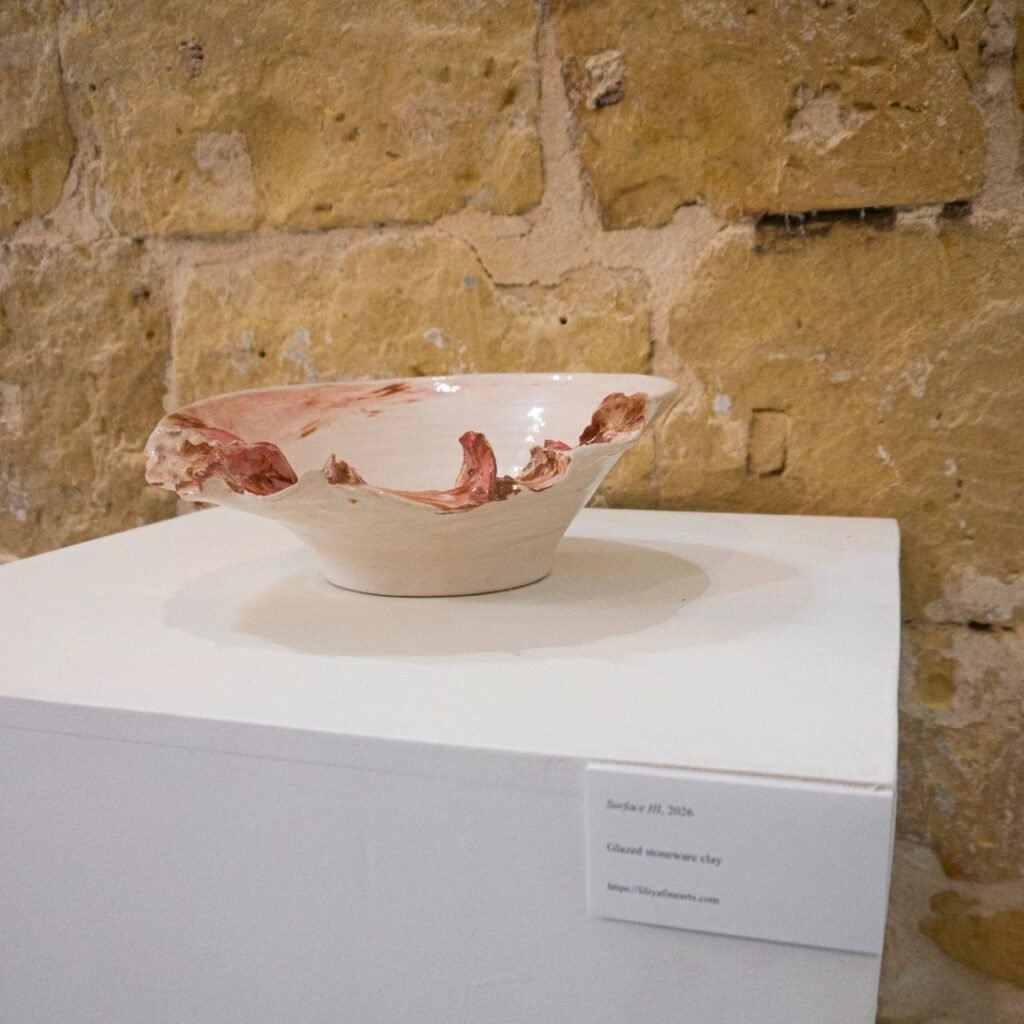
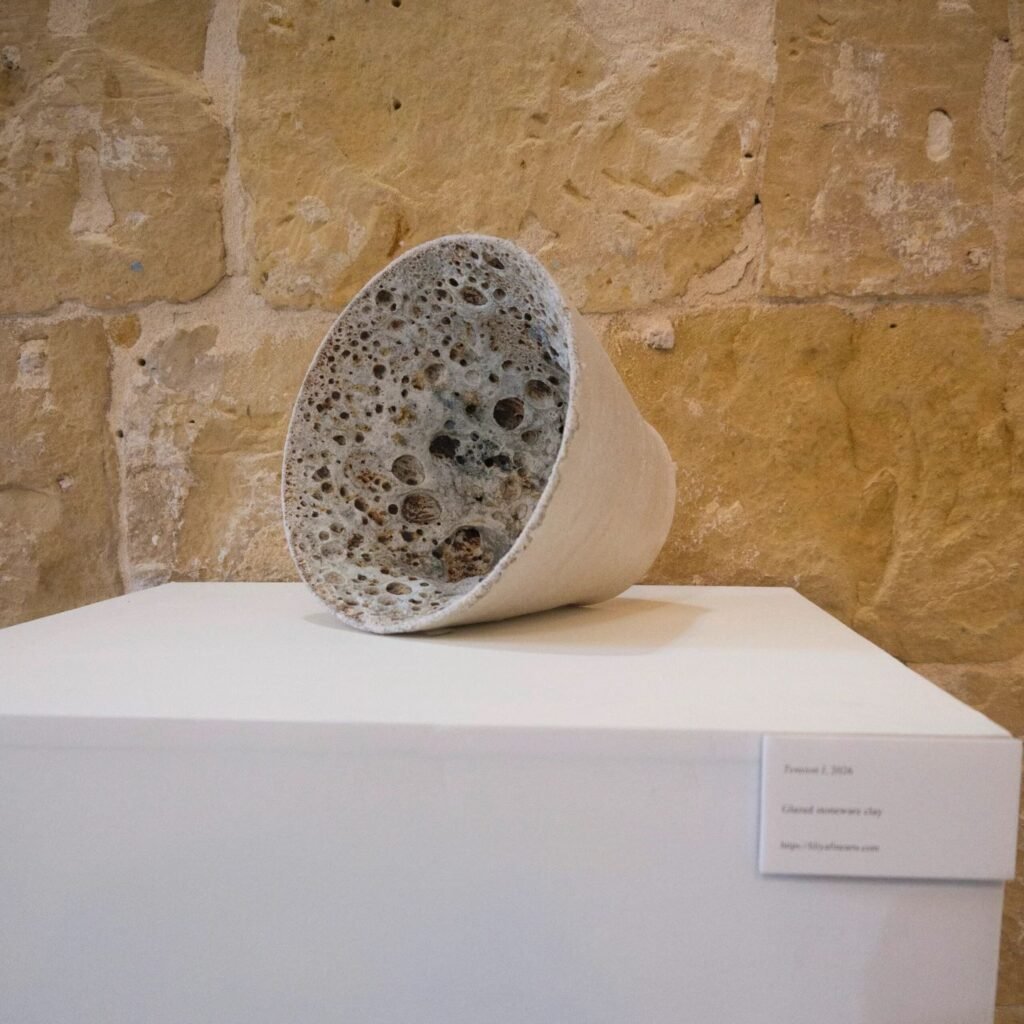
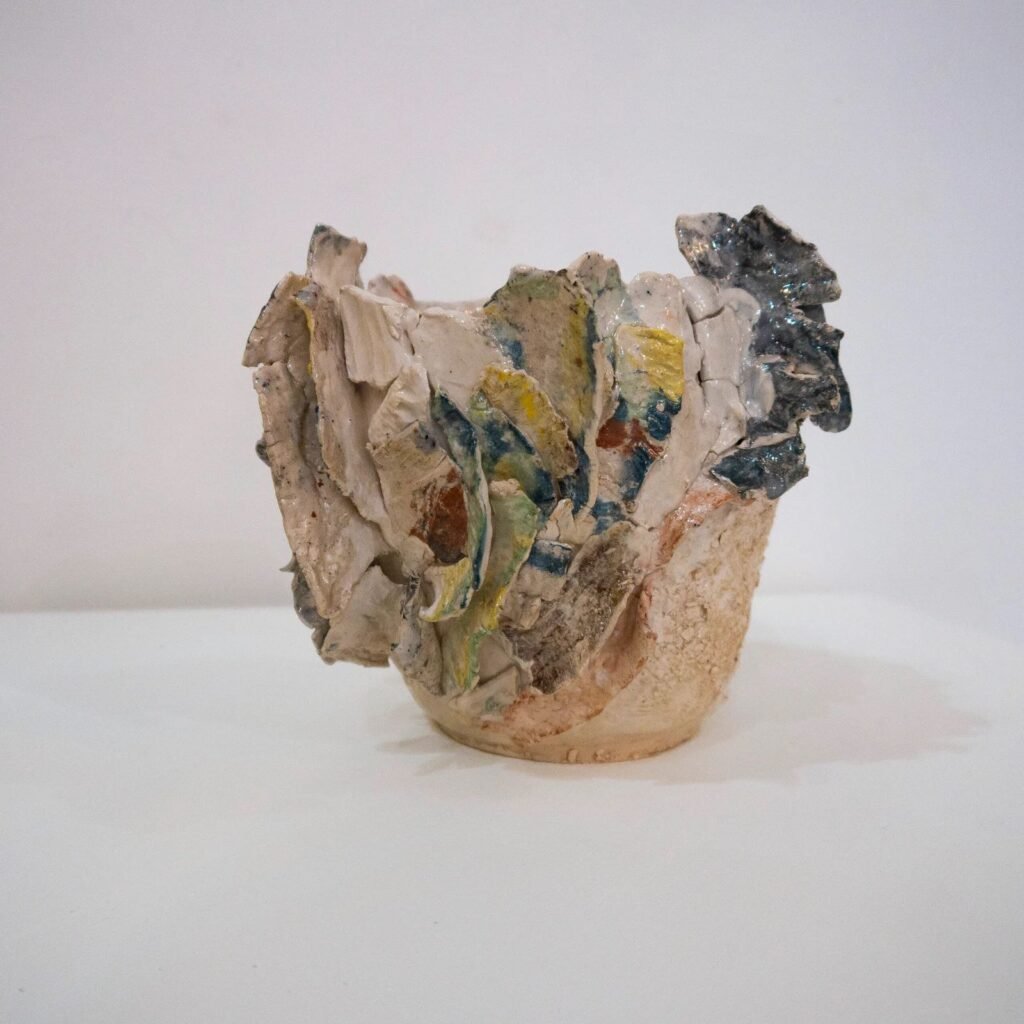
Yes, it definitely boosted my self-confidence. Before the exhibition, I carried some doubts as any emerging artist would. I never aimed to create at commercial art, so naturally there was this fear, fear that people may not understand your work or connect with it.
The exhibition consisted of ceramic sculptures inspired by natural stone textures and functional forms. The artworks were abstract, but emotionally grounded in the Mediterranean landscape.
What touched me most was not only that the exhibition sold, but who attended it. Many buyers were collectors, artists, appreciators of contemporary art. As a foreign artist living abroad, recognition from the local artistic scene gives you a sense of belonging and courage that is very satisfactory and beyond explanation.
The Beauty of Unfinished Forms
6. Your newer work seems more focused on transformation, movement, and unfinished process rather than perfection. Why are those ideas important to you?
Because transformation is the state we all live in.
When I look at my surrounding, nothing remains fixed, not people, not places, not emotions. For me, art is becoming less about explaining conceptualising and more about feeling.
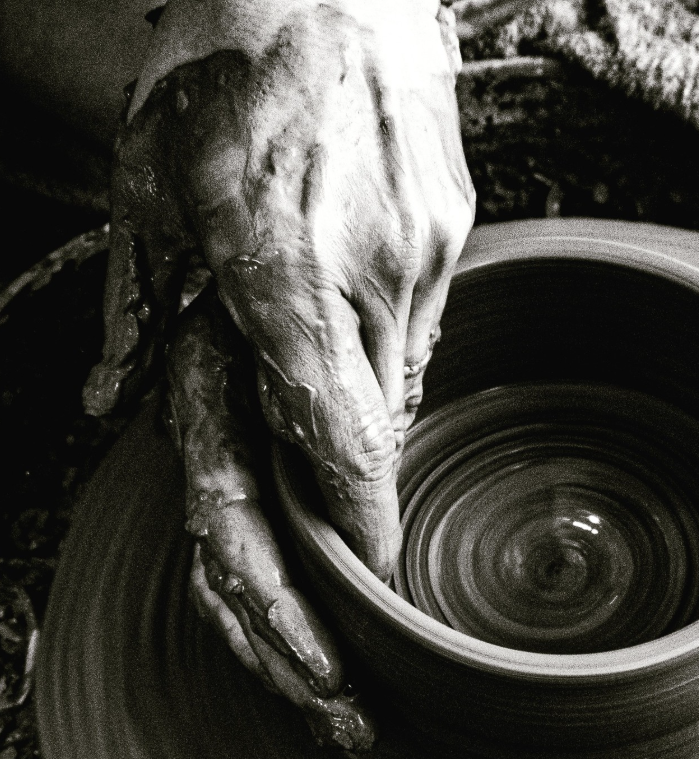
Sometimes I recycle materials or reshape older objects into new forms. I work with clay, glass, natural textures, and mixed media. Hence, I want the viewer to feel that the artwork is alive, not frozen in perfection, but caught somewhere in the process.
I don’t need everyone to interpret my work exactly as I do. If someone stands in front of it and feels any emotion and curiosity, then the artwork already succeeded.
7. As an artist, teacher, and mother, how do you manage to balance everything?
I’m still learning. There are days when it feels overwhelming because all these roles require mental focus and emotional presence. I teach full-time, I work at my art studio, I sometimes give private art lessons, and at the same time motherhood completely changes your relationship with time and energy.
But oddly enough – all these parts of life also feed each other creatively. Teaching keeps me connected to people and ideas, while motherhood changed the way I understand patience, sensitivity, and emotional depth. My studio work remains essential to who I am, even though it’s not my main source of income. It is still the language through which I process life.
8. What would you ultimately like people in Malta and Gozo to understand about you as an artist?
I would like people to associate my artworks as an experience rather than decoration. As an art is shaped by movement between countries, by adaptation, by motherhood, by language, by uncertainty, by transformation itself. I don’t create simply to produce aesthetic objects. I create because art helps me understand the emotional changes we all go through as human beings in a more expressive way.
Maybe that is why I am drawn to unfinished forms, because none of us are ever truly finished.
Where Movement Leaves Its Mark
Listening to Liliya Pangelova, one quickly understands that her journey has never followed a straight line. It moved through countries, languages, workshops, motherhood, uncertainty, and reinvention, much like the materials she works with. Glass melts, clay reshapes, surfaces crack, textures evolve. Nothing remains static for long.
There is something quietly powerful in that refusal to be fixed. In a world that rewards certainty, Liliya has built an artistic practice out of the in-between — the moment before something solidifies, the form that is still finding itself. It is precisely this quality that makes her work feel so immediate, and so human.
As Gozo continues growing into a more culturally ambitious space, artists like Liliya are helping redefine what contemporary art on the island can become — intimate yet international, experimental yet emotionally grounded. Her upcoming work will no doubt continue to evolve in form and scale. But one thing already feels certain: standing in front of it, you will not simply witness transformation. You will recognise something of yourself inside it.
Wenn Sie als Auswanderer in Malta oder Gozo leben und eine Geschichte haben, die es wert ist, erzählt zu werden, würden wir uns freuen, von Ihnen zu hören - verbinden Sie sich mit uns über unsere sozialen Medien (siehe unten) oder ein Kontaktformular über unsere Website ausfüllen.



 English
  Danish
  French
  German