


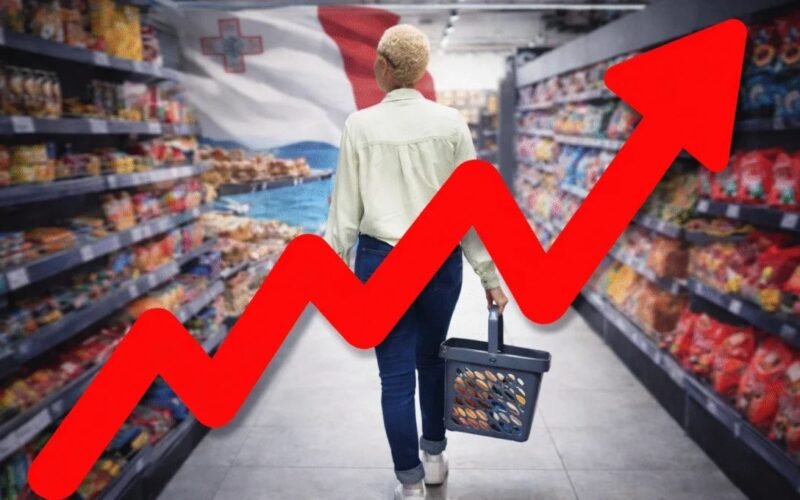
Die Inflation bei Lebensmitteln macht sich selten in einem einzigen dramatischen Moment bemerkbar. Stattdessen macht sie sich bei den Grundnahrungsmitteln bemerkbar, die die meisten Haushalte jede Woche kaufen, wie Brot, Milch, Nudeln, frisches Gemüse und Fleisch, wo selbst kleine Erhöhungen die monatlichen Ausgaben allmählich verändern. Mit der Zeit wirken sich diese Veränderungen kumulativ auf die Haushaltsbudgets aus.
Jüngste amtliche Daten bestätigen, dass die Lebensmittelpreise in Malta weiter gestiegen sind, was die Lebensmittel zu einem der wichtigsten Faktoren für die Gesamtinflation macht. Sowohl für Expatriates als auch für langfristig in Malta lebende Personen ist es wichtig, diese Trends zu verstehen, um eine realistische Budgetplanung für das Jahr 2026 zu erstellen.
Was die offiziellen Daten besagen
Nach Angaben des Nationalen Statistikamtes (NSO), Die Gesamtinflationsrate Maltas ging im November 2025 auf 2,6% zurück, während die Lebensmittelpreise weiterhin schneller als der Gesamtdurchschnitt stiegen und am stärksten zur Inflation beitrugen. Die vom NSO veröffentlichten Zahlen zeigen, dass Nahrungsmittel während des gesamten Jahres 2025 einer der Haupttreiber der Inflation waren. In den Veröffentlichungen des Einzelhandelspreisindex wird immer wieder darauf hingewiesen, dass Kategorien im Zusammenhang mit Nahrungsmitteln, einschließlich Lebensmittel, Restaurantdienstleistungen und Mahlzeiten zum Mitnehmen, einen anhaltenden Aufwärtsdruck auf die Preise ausübten.
Die Daten auf Kategorieebene zeigen eine Inflation bei Lebensmitteln von etwa 3,4% im Jahresvergleich, was den anhaltenden Druck auf die Haushalte erklärt.
Wie sich die Lebensmittelinflation auf den täglichen Bedarf auswirkt
Um die offizielle Lebensmittelinflation in einen Kontext zu stellen, zeigt die folgende Tabelle, wie sich die Lebensmittelkategorien des NSO im Laufe des Jahres 2025 entwickelt haben. Diese Zahlen spiegeln die Inflation auf Kategorienebene wider, nicht die Preise einzelner Supermärkte oder bestimmter Produkte.
| Lebensmittelkategorie (NSO-Klassifizierung) | Ungefähre jährliche Veränderung im Jahr 2025 | Was dies im Alltag bedeutet |
| Brot und Müsli | Aufwärts 3-4% | Nudeln, Brot, Reis und Mehlprodukte werden immer teurer |
| Milch, Käse und Eier | Aufwärts ~3% | Grundnahrungsmittel aus der Milchwirtschaft stiegen im Laufe des Jahres stetig an |
| Fleisch (einschließlich Huhn und Schweinefleisch) | Aufwärts ~4%+ | Fleischpreise stiegen schneller als die Gesamtinflation |
| Öle und Fette | Aufwärts ~3% | Speiseöle und Butter verzeichneten einen moderaten Anstieg |
| Lebensmittel insgesamt | Aufwärts 3.4% |
Die Preise für die einzelnen Produkte variieren zwar je nach Einzelhändler und Werbeaktionen, doch diese offiziellen Zahlen erklären, warum der tägliche Lebensmitteleinkauf im Laufe der Zeit teurer geworden ist.
Lebensmittelkosten und Druck auf die Haushalte

Für viele Haushalte sind Lebensmittel zu einem der besorgniserregendsten Bestandteile der monatlichen Ausgaben geworden. Seit 2022 müssen die Familien steigende Kosten in mehreren Bereichen gleichzeitig auffangen - darunter Lebensmittel, Miete und Kreditrückzahlungen.
Haushalte, die eine Immobilie vermieten, haben oft nur eine begrenzte Flexibilität, wenn die Fixkosten steigen, während diejenigen, die ein Hausdarlehen bedienen, sich in den letzten Jahren auf ein höheres Zinsumfeld einstellen mussten. In diesem Zusammenhang sind die Lebensmittelkosten einer der wenigen verbleibenden Bereiche, in denen Familien versuchen, ihre Ausgaben zu steuern und anzupassen, so dass selbst allmähliche Preissteigerungen besonders spürbar sind.
Obwohl die maltesische Regierung Unterstützungsmaßnahmen und zusätzliche Einkommenshilfen für einkommensschwache Haushalte eingeführt hat, sind viele Familien nach wie vor mit finanziellen Problemen konfrontiert. Für eine wachsende Zahl von Einwohnern ist die Haushaltsplanung zu einer Übung von Monat zu Monat geworden, die sich eher auf die Deckung des Lebensnotwendigen als auf langfristige Planung konzentriert.
Welcher Trend wird für die Lebensmittelpreise im Jahr 2026 erwartet
Bis zum Jahr 2026 werden die Lebensmittelpreise in Malta voraussichtlich auf einem hohen Niveau bleiben, auch wenn sich der Anstieg verlangsamt. Auch wenn die Inflation im Vergleich zu früheren Spitzenwerten zurückgegangen ist, deuten die offiziellen Daten darauf hin, dass Lebensmittel weiterhin strukturellen Druck auf die Haushaltsbudgets ausüben.
Die Abhängigkeit Maltas von Lebensmittelimporten in Verbindung mit Kostenanpassungen in der gesamten Lebensmittelversorgungskette bedeutet, dass eine Rückkehr zum Preisniveau von vor 2022 unwahrscheinlich ist. Stattdessen wird für das Jahr 2026 eher eine größere Preisstabilität auf einem höheren Ausgangsniveau erwartet, als dass die Preise deutlich sinken.
Ein Hinweis zu Haushaltsbudgets
Für viele Einwohner macht sich die Veränderung nicht bei einem einzelnen Einkauf bemerkbar, sondern bei der Gesamtsumme an der Kasse. Ein Wocheneinkauf, der sich früher in einem vertrauten Rahmen bewegte, wird nun oft teurer, selbst wenn man die gleichen Grundnahrungsmittel kauft. Im Laufe der Zeit hat diese allmähliche Veränderung dazu geführt, dass die Ausgaben für Lebensmittel zu einem der am stärksten überwachten Teile des Haushaltsbudgets geworden sind.
Auch wenn für 2026 keine drastischen Steigerungen zu erwarten sind, werden die Ausgaben für Lebensmittel wahrscheinlich erhöht bleiben, so dass eine sorgfältige Budgetplanung sowohl für Expats als auch für Einheimische immer wichtiger wird.
Verbunden bleiben
Bleiben Sie auf dem Laufenden über das Leben als Expat, den Aufenthalt und die Steuern in Malta und Gozo - folgen Sie uns auf unseren Social-Media-Kanälen, um weitere Einblicke und Updates zu erhalten.





 English
  Danish
  French
  German