


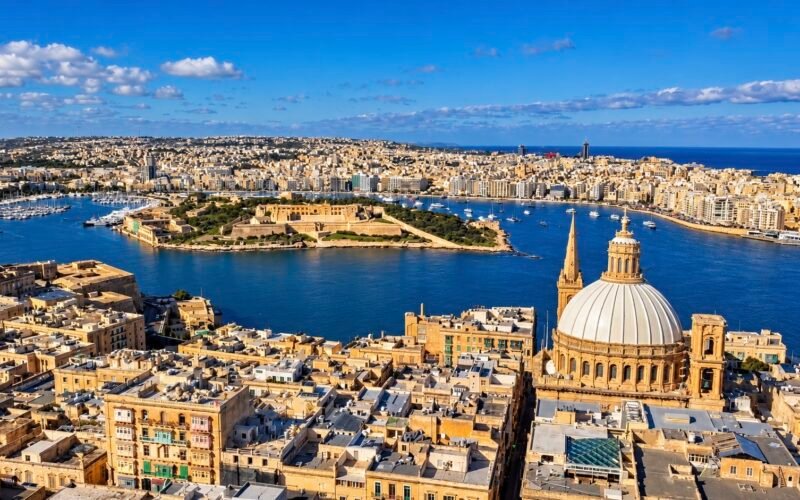
Malta is preparing to review its immigration legislation, with the government aiming to introduce clearer procedures and a legal framework that better reflects the country’s current needs. Announced by Home Affairs and Security Minister Glenn Bedingfield on 12 October 2026, the planned reform could have implications for foreign residents, employers and families living in Malta.
Part of the reform will involve reviewing Malta’s Immigration Act (Chapter 217), which dates back to 1970. Although the law has been amended many times, its original legal framework remains in place. Since its introduction, Malta has joined the European Union and the Schengen Area, while its economy, population and labour market have changed considerably.
The government aims to make immigration procedures clearer and more efficient while maintaining national security and protecting individual rights. However, the proposed amendments have not yet been published.
Why Does Malta Need Immigration Reform?
Malta’s immigration system operates in a very different environment from the one in which the Immigration Act was introduced more than five decades ago.
According to the National Statistics Office, non-Maltese citizens accounted for 31.1% of Malta’s resident population at the end of 2025. Meanwhile, Jobsplus figures show that 135,417 foreign nationals were employed in Malta and Gozo, including both EU and non-EU citizens.
These figures reflect how much Malta has changed and the growing importance of immigration procedures for residents, businesses and public authorities.
Over the years, Malta has introduced various amendments and regulations covering different aspects of immigration, including residence, employment and family reunification.
More recently, the phased introduction of the Labour Migration Policy in 2025 brought additional requirements for employers and third-country nationals. While eligible workers gained a grace period to seek alternative employment, higher application fees and stricter recruitment checks have also made some procedures more demanding.
One concern is that employment applications may be refused following Jobsplus assessments of an employer’s compliance record, even where the prospective employee has little control over the circumstances. As application fees are generally non-refundable, this raises questions about how the financial consequences of unsuccessful applications should be shared.
The wider review provides an opportunity to examine how Malta’s immigration legislation operates today and whether its procedures remain suitable for the country’s changing needs.
What Could Change for Foreign Residents and Employers?
One of the main questions is whether the reform will make immigration procedures clearer and more predictable.
For foreign residents, this could be particularly relevant to the rules governing entry, lawful residence and the administrative procedures involved in maintaining immigration status.
Employers will also be watching for developments that could affect recruitment and the employment of foreign nationals, particularly where immigration and employment requirements overlap.
Under the current Single Permit system, for example, a third-country national’s residence and employment authorisation is generally linked to a specific employer and job. Changes in employment can therefore affect their residence status.
Separately, discussions under Malta’s Labour Migration Policy in September 2026 raised the possibility of a more consistent approach to permit validity, taking into account employer compliance, employee retention and integration.
The government has not confirmed any changes to residence permit conditions, application fees, processing times or employment-related procedures as part of the October reform announcement.
It is also not yet known which provisions of the existing Immigration Act will be amended.
What About Families Living in Malta?
For foreign residents who have established their lives in Malta, immigration rules can also affect their families and long-term plans.
Family reunification is one area worth following. Existing rules set out the conditions under which eligible family members can join a sponsor living in Malta, including requirements relating to income, accommodation and residence status.
In September 2026, the government identified family reunification as an area for possible review during separate discussions on the Labour Migration Policy.
Any future changes could therefore be relevant to families planning to settle in Malta. However, it remains unclear whether family reunification amendments will form part of the wider Immigration Act reform.
For now, the existing requirements continue to apply.
What Happens Next?
The government has indicated that further details of the immigration reform will be announced in the coming months.
The review is still at an early stage, and no draft amendments have been published. This means there is currently no indication of exactly which procedures will change or when any new measures might take effect.
For foreign residents, employers and families, nothing has changed as a result of the October announcement. Existing immigration and residence requirements remain in place.
This article is based on information available as of 26 October 2026. The proposed reforms have not yet been enacted, and existing immigration laws and residence requirements remain in force.





 English
 Danish
 French
 German