


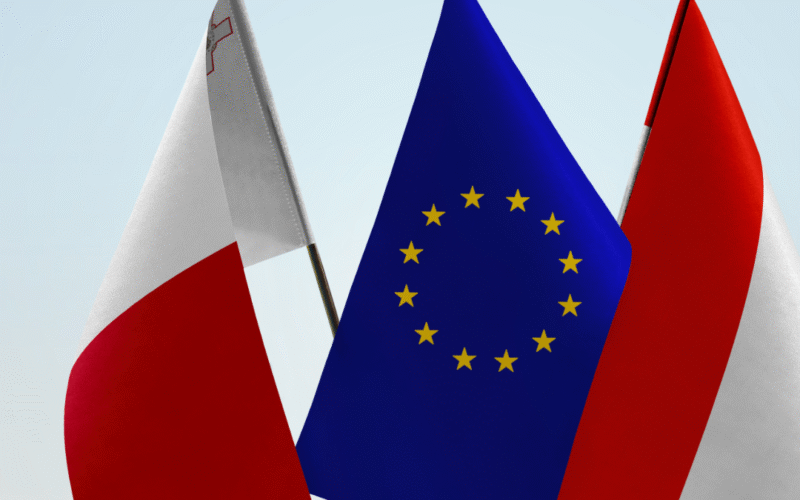
Malta continues to attract financially independent EU nationals seeking stability, English-speaking administration, and a high quality of life within the European Union. For EU/EEA citizens who wish to reside in Malta without taking up employment, the relevant pathway is registration under the Economic Self-Sufficient category with Identità.
Although commonly referred to as the “EU Self-Sufficient Visa,” this is not a visa. EU nationals do not require a visa to live in Malta. Instead, those staying longer than three months must formally register their residence and obtain an eResidence document under the appropriate category.
Legal Basis
EU nationals benefit from free movement rights under EU law. In Malta, residence formalities are administered by Identità Malta (Expatriates Unit). An EU citizen intending to reside in Malta for more than three months must register their residence and obtain the relevant documentation confirming their right of residence.
Under the Economic Self-Sufficient category, applicants must demonstrate:
- Sufficient financial resources so as not to become a burden on Malta’s social assistance system; and
- Comprehensive sickness insurance cover in Malta.
Who Qualifies as Economically Self-Sufficient?
This route is generally suitable for:
- Retirees
- Individuals living from savings or investments
- Financially independent EU nationals
- Non-working spouses of financially secure individuals
The key requirement is that the applicant can demonstrate stable and sufficient financial means.
Exigences financières
Under the Economic Self-Sufficient route, the applicant must demonstrate that they possess stable and sufficient financial resources to support themselves in Malta without relying on the country’s social assistance system. Identità links this assessment to the minimum means used to determine eligibility for social assistance in Malta, meaning the applicant must show access to funds at least equivalent to that benchmark. In practice, this may be evidenced through pension income, accumulated savings, investment returns, or other lawful and sustainable sources of funds.
The key consideration is not only the amount available, but also the stability, accessibility, and continuity of those resources. Clear, recent, and well-documented financial evidence significantly strengthens the application and reduces the delays.
Healthcare Requirement
A core pillar of the Economic Self-Sufficient route is proof of comprehensive sickness insurance cover in Malta.
Identità accepts one of the following:
- Private comprehensive health insurance valid in Malta
- S1 certificate issued by the applicant’s country of origin
- Un entitlement certificate covering one year in Malta (issued locally where applicable)
💡 Remarque importante : Le Carte européenne d'assurance maladie (CEAM) is designed for temporary stays and emergency treatment. It is not generally considered equivalent to comprehensive health insurance for long-term residence purposes.
Reporting Presence and Registration Timeline
There are two separate compliance points to consider:
1. Reporting Presence
Certain individuals may be required to report their presence in Malta within one month of arrival, depending on their accommodation arrangements.
2. Residence Registration
If an EU national intends to reside in Malta for more than three months, they are legally required to register their residence and apply for the appropriate eResidence document.
Processus de candidature
- Étape 1 – Online Application: Applications are submitted via the Portail de l'unité Identità Expatriés under the Economic Self-Sufficient category.
- Step 2 – Documentation Preparation: Checklist
- Valid passport or national ID (original and copy)
- Completed Form J
- Proof of sufficient financial means
- Proof of healthcare coverage
- GDPR form
- Official translations (if documents are not in English or Maltese)
- Step 3 – Appointment and Biometrics: Applicants attend an appointment as instructed by Identità to finalise the process.
Identità indicates an approximate processing timeframe of around 30 working days, subject to completeness of documentation.
Common Practical Issues
Delays under the Economic Self-Sufficient route most commonly arise from unclear financial documentation, inadequate health coverage, or missing translations. Financial evidence should be recent, consistent, and clearly demonstrate account ownership and accessibility of funds. Health insurance must be comprehensive and explicitly valid in Malta, as limited or short-term policies may not meet Identità’s requirements.
Important note: The Economic Self-Sufficient route provides residence documentation based on the continued fulfilment of the conditions. After five years of continuous legal residence in Malta, EU nationals may become eligible for permanent residence, subject to meeting the relevant criteria.
💡
Family Members Joining an EU Self-Sufficient Resident
Family members may accompany or join an EU national residing in Malta under the Economic Self-Sufficient route. The applicable procedure depends on the nationality of the family member.
If the family member is also an EU/EEA citizen, they may register their residence in Malta on the basis of accompanying the EU sponsor, provided they submit documentation proving the family relationship (such as a marriage or birth certificate) and meet the relevant conditions.
If the family member is a third-country national (TCN), meaning not an EU/EEA/Swiss citizen – a different process applies. In this case, the TCN family member must apply for a Residence Card as a family member of an EU citizen under EU free movement rules. This involves submitting proof of the qualifying relationship, evidence that the EU sponsor is exercising their treaty rights in Malta (in this case as economically self-sufficient), and meeting any additional documentation requirements imposed by Identità.
Considérations finales
Establishing residence in Malta under the Economic Self-Sufficient route is generally a straightforward process for EU nationals who prepare correctly. The key lies in presenting clear financial evidence, securing appropriate healthcare coverage, and ensuring that all documentation is complete and compliant from the outset. While the legal framework is structured and transparent, practical issues often arise from small administrative oversights rather than eligibility itself. Careful preparation significantly reduces unnecessary delays and uncertainty.
Guidance at Every Stage
Notre équipe is here to support you throughout your relocation to Malta. Whether you need clarity on eligibility, guidance in preparing your financial documents, or reassurance that your healthcare coverage meets the requirements, we work alongside you to make the process clear and manageable. Relocating to a new country involves important decisions, and our role is to provide steady, practical advice so you can move forward with confidence and peace of mind.
CONTACTEZ-NOUS




 English
  Danish
  French
  German